
दिनभर: पूरा दिन,पूरी ख़बर (Dinbhar)
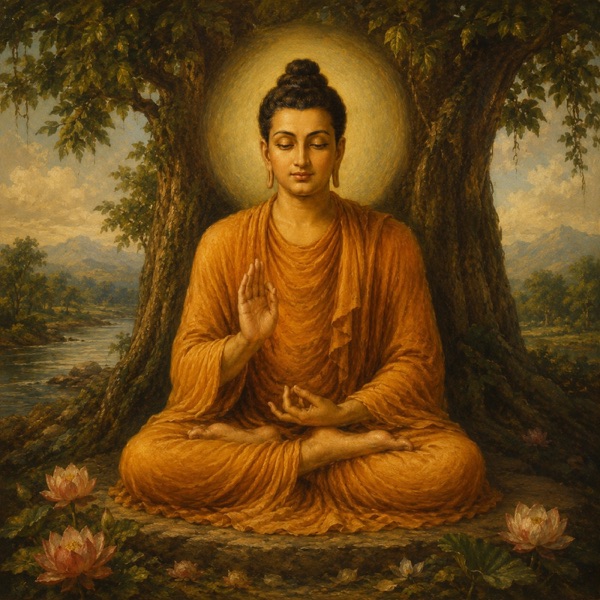
Buddha's Stories: Self-Help, Mental Health and Psychologyis a podcast that combines timeless Buddhist wisdom with modern psychology and practical self-improvement. Through inspiring stories of the Buddha, ancient parables, and mindfulness teachings, each episode explores topics like mental health, emotional healing, stress management, self-discipline, inner peace, confidence, happiness, meditation, and personal growth.
Whether you're looking to reduce anxiety, build resilience, improve your mindset, or find daily motivation, this podcast offers simple, actionable lessons rooted in Buddhist philosophy and mindfulness. Perfect for anyone interested in self-help, psychology, meditation, Buddhism, mental wellness, emotional intelligence, and living a more peaceful and purposeful life.
Listen weekly for inspiring stories and practical insights that help you grow, heal, and transform your life one story at a time.
Hosted on Acast. See acast.com/privacy for more information.
No character in the history of all religions is as fierce as the Hindu goddess Kali. In the 20th century, with the rise of women rights, feminists came to view Kali as the as embodiment of feminine power. However, the image of Kali that exists in the West is rather different from the way most Indians see her. Although Kali is associated with blood, death and destruction, she is also seen as a Mother figure, and often referred to as Maa Kali meaning Mother Kali. Kali associates with her many different forms and stories. Maha Kali, Bhadra Kali, Dakshina Kali, Chandika are some of her many forms. Hosted on Acast. See acast.com/privacy for more information.
No character in the history of all religions is as fierce as the Hindu goddess Kali. In the 20th century, with the rise of women rights, feminists came to view Kali as the as embodiment of feminine power. However, the image of Kali that exists in the West is rather different from the way most Indians see her. Although Kali is associated with blood, death and destruction, she is also seen as a Mother figure, and often referred to as Maa Kali meaning Mother Kali. Kali associates with her many different forms and stories. Maha Kali, Bhadra Kali, Dakshina Kali, Chandika are some of her many forms. Hosted on Acast. See acast.com/privacy for more information.
No character in the history of all religions is as fierce as the Hindu goddess Kali. In the 20th century, with the rise of women rights, feminists came to view Kali as the as embodiment of feminine power. However, the image of Kali that exists in the West is rather different from the way most Indians see her. Although Kali is associated with blood, death and destruction, she is also seen as a Mother figure, and often referred to as Maa Kali meaning Mother Kali. Kali associates with her many different forms and stories. Maha Kali, Bhadra Kali, Dakshina Kali, Chandika are some of her many forms. Hosted on Acast. See acast.com/privacy for more information.
Why did Goddess Ganga drown her seven children in the Mahabharata? King Shantanu once fell in love with Goddess Ganga, who agreed to marry him on one condition: he must never question her actions. After their marriage, Ganga gave birth to seven sons, but each time, she drowned the newborn in the river. Heartbroken, Shantanu remained silent until the birth of their eighth child. The reason lay in a curse from their previous birth. The seven children were the eight Vasus, divine beings who had been cursed by Sage Vashistha to be born as humans. Ganga had promised to free them from the curse by drowning them immediately after birth. However, the eighth Vasu was destined to live a long human life. When Shantanu finally stopped Ganga from drowning the eighth child, she revealed the truth and left with the baby. She named him Devavrata, who later became the legendary warrior Bhishma Pitamah, one of the greatest figures in the Mahabharata. Hosted on Acast. See acast.com/privacy for more information.
Navaratri celebrates the victory of good over evil through the nine divine forms of Goddess Durga, collectively known as Navadurga. Each form represents a unique power and is worshipped on a different day. The nine forms are Shailaputri, the daughter of the mountains; Brahmacharini, the symbol of devotion and penance; Chandraghanta, the fierce warrior; Kushmanda, the creator of the universe; Skandamata, the mother of Lord Kartikeya; Katyayani, the powerful destroyer of evil; Kaalratri, the destroyer of darkness; Mahagauri, the symbol of purity and peace; and Siddhidatri, the goddess who grants divine blessings and spiritual powers. Together, these nine forms represent the strength, courage, compassion, and divine energy of Goddess Durga, reminding us that good always triumphs over evil. Hosted on Acast. See acast.com/privacy for more information.
The story of Barbarik, found in regional Mahabharata traditions, tells of a mighty warrior who possessed three divine arrows blessed by Lord Shiva. The grandson of Bhima and son of Ghatotkacha, Barbarik believed he could end the entire Kurukshetra War in just one minute. Each arrow had extraordinary power: one could mark targets for destruction, another could mark those to be protected, and the third could complete the task with perfect precision. Lord Krishna, disguised as a Brahmin, tested Barbarik's strength and was astonished by his abilities. Recognizing him as an exceptionally brave warrior, Krishna asked Barbarik to sacrifice his head before the battle. True to his promise, Barbarik willingly offered his head to Krishna, making his sacrifice a legendary tale of devotion and courage. Hosted on Acast. See acast.com/privacy for more information.
Indra, the king of the Devas and ruler of Swargaloka, is the god of rain, thunderstorms, and lightning. Known for his power as well as his mischievous nature, Indra became the subject of a notorious legend. According to versions found in the Ramayana and the Padma Purana, he was cursed after an encounter with Ahalya, bearing a thousand marks of shame upon his body. Hosted on Acast. See acast.com/privacy for more information.