
Episode's summary
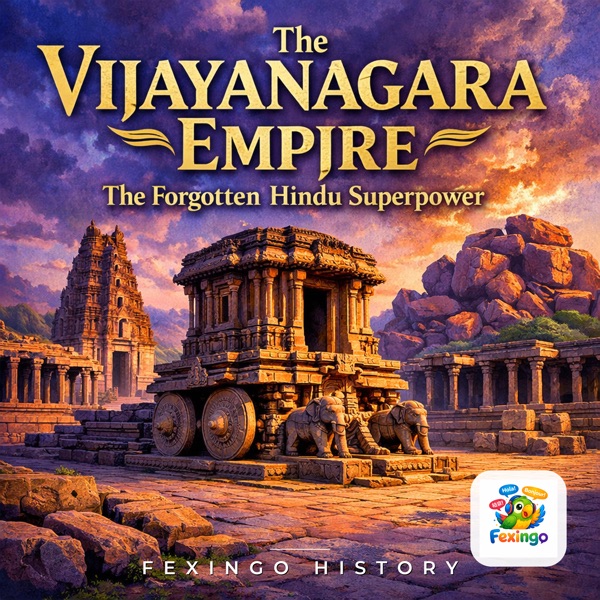
While we’ve explored the empire’s military, navy, and court politics, this episode turns to the stones themselves. We investigate how the Amara-Nayaka governors transformed Hampi from a royal capital into a sprawling urban center through decentralized patronage. Lucas walks us through the specific architectural innovations of the Hazara Rama Temple and the Virupaksha complex, explaining how corbelled arches and intricate stone chariots reflect a fusion of Dravidian and Islamic styles. Luna asks about the daily life of the commoners who lived in the shadow of these grand structures, leading to a discussion on the Pushkarni water systems and the economic resilience of the Deccan Plateau during the 15th and 16th centuries. We also touch upon the controversial legacy of Aliya Rama Raya and how his administrative reforms laid the groundwork for both the empire’s golden age and its eventual fragmentation at Talikota. This is a deep dive into the material culture that sustained one of India’s most powerful…
While we’ve explored the empire’s military, navy, and court politics, this episode turns to the stones themselves. We investigate how the Amara-Nayaka governors transformed Hampi from a royal capital into a sprawling urban center through decentralized patronage. Lucas walks us through the specific architectural innovations of the Hazara Rama Temple and the Virupaksha complex, explaining how corbelled arches and intricate stone chariots reflect a fusion of Dravidian and Islamic styles. Luna asks about the daily life of the commoners who lived in the shadow of these grand structures, leading to a discussion on the Pushkarni water systems and the economic resilience of the Deccan Plateau during the 15th and 16th centuries. We also touch upon the controversial legacy of Aliya Rama Raya and how his administrative reforms laid the groundwork for both the empire’s golden age and its eventual fragmentation at Talikota. This is a deep dive into the material culture that sustained one of India’s most powerful…
Episodes
The Lost City of Vijayanagara: Hampi's Hidden Depths
ListenedWhile we’ve explored the empire’s military, navy, and court politics, this episode turns to the stones themselves. We investigate how the Amara-Nayaka governors transformed Hampi from a royal capital into a sprawling urban center through decentralized patronage. Lucas walks us through the specific architectural innovations of the Hazara Rama Temple and the Virupaksha complex, explaining how corbelled arches and intricate stone chariots reflect a fusion of Dravidian and Islamic styles. Luna asks about the daily life of the commoners who lived in the shadow of these grand structures, leading to a discussion on the Pushkarni water systems and the economic resilience of the Deccan Plateau during the 15th and 16th centuries. We also touch upon the controversial legacy of Aliya Rama Raya and how his administrative reforms laid the groundwork for both the empire’s golden age and its eventual fragmentation at Talikota. This is a deep dive into the material culture that sustained one of India’s most powerful…
Vijayanagara's Golden Lions: The Empire's Lost Mint
ListenedWhile Hampi’s stone chariot stands as a monument to architectural grandeur, the empire’s true economic engine was its gold. In this episode, Lucas and Luna explore the Vijayanagara Empire’s sophisticated minting system under Krishnadevaraya and his successors. We look at the 'Honi' coin, a standard of purity that facilitated trade across the Indian Ocean, and how the state controlled gold supply through strict regulations on mining and circulation. Luna asks about the visual language of these coins—why lions?—leading to a discussion on the symbolism of power, divine right, and the specific mints located in cities like Kalyani and Bidar. We also examine the controversial practice of debasement during times of war, particularly under Aliya Rama Raya, and how the influx of Portuguese silver eventually destabilized the local economy. This is a deep dive into the currency that built an empire. #VijayanagaraEmpire #Hampi #Krishnadevaraya #GoldMinting #IndianNumismatics #DeccanHistory #SouthAsianEconomy #HoniCoin…
Vijayanagara's Forgotten Temple Dancers
ListenedWhile we have explored the military might and political intrigue of the Vijayanagara Empire, this episode shifts focus to the sacred arts that defined its spiritual landscape. We examine the role of the Devadasis, or temple dancers, in Hampi’s religious life. Lucas traces how royal patronage transformed dance from a ritual into a state-sponsored institution under Krishnadevaraya. Luna asks about the social mobility these women experienced. Together, they discuss the tension between artistic excellence and societal stigma, revealing how figures like the poetess Akka Mahadevi influenced court culture. This conversation uncovers the human stories behind the stone chariot and the Hazara Rama Temple. #VijayanagaraEmpire #HampiRuins #DevadasiSystem #Krishnadevaraya #TempleDance #SouthAsianHistory #CarnaticMusic #IndianArtHistory #TuluvaDynasty #SacredArts #WomenInHistory #DeccanSultanates #ReligiousRituals #BhaktiMovement #AkkaMahadevi #FexingoHistory #HistoryPodcast #AncientIndia Keep every episode free:…
Vijayanagara's Royal Women: Politics and Power
ListenedIn this episode, we turn our gaze away from the battlefield and into the zenana of Vijayanagara. While earlier episodes covered the empire’s military bureaucracy and naval power, we explore how royal women navigated a world of shifting alliances and dynastic survival. We look at Queen Chellamma during the chaotic years in Penukonda, the political marriages that bound the Aravidu Dynasty to regional powers, and the subtle influence wielded by queens who managed household economies and religious endowments. From the sacred geometry of temple politics to the realpolitik of widowhood and regency, we uncover how these women kept the state standing when the empires around them were falling. #VijayanagaraEmpire #QueenChellamma #AraviduDynasty #PenukondaFortress #SouthAsianHistory #RoyalWomen #ZenanaPolitics #HinduKingdoms #DeccanSultanates #HistoricalWomen #IndianArchitecture #MedievalIndia #DynasticSurvival #TempleEconomics #FexingoHistory #HistoryPodcast #SouthAsia #ForgottenHistory Keep every episode free:…
Vijayanagara's Sacred Music and Temple Rituals
ListenedWe step inside the sanctums of Hampi to explore how music wasn't just entertainment but the very engine of state legitimacy. Lucas and Luna trace the evolution of Carnatic music from its folk roots to a high-court art form, guided by the visionary composer Purandara Dasa. We look at how Krishnadevaraya used royal patronage to codify ragas and talas, turning temple festivals into political spectacles that unified a fractured Deccan. The conversation examines the specific instruments like the veena and mridangam, the role of devadasis in maintaining ritual purity, and the theological debates between Advaita Vedanta and Bhakti traditions. By analyzing the lyrics of the kirtans and the architecture of the Hazara Rama Temple, we see how sound was engineered to project imperial power and spiritual devotion simultaneously. #Vijayanagara #Hampi #Krishnadevaraya #PurandaraDasa #CarnaticMusic #DeccanHistory #TempleRituals #BhaktiMovement #SouthIndia #IndianClassicalMusic #HazaraRamaTemple #AdvaitaVedanta #Devadasi…